Comprehensive Podcast Notes Below
"World-Tour riders are uniquely positioned to adhere to a supported and data-driven, Train-Refuel-Recover, performance paradigm"
Train Your Age - with Dr David Hulse
Dr David Hulse is a World Tour Doctor and longtime Cyclefit friend and collaborator. Dave is also a Midlife Cyclist himself, and seeks to prolong or even extend his own performance envelope as he ages. As well as his professional cohort, Dave also sees many older athletes in his private clinics at Pure Sports Medicine. It is fair to say that Dave is a specialist in endurance sport and cycling medicine. Who better to help us as we set sail into 2026.
- Setting our goals for 2026
- Setting realistic expectations
- Creating the optimal training and performance paradigm
- Avoiding injury and illness
- Building resilience to training loads to make our exercise program sustainable.
- Maximizing adaptation to training stimulus
This Video podcast was filmed 18th December at Cyclefit Store Street by our friend and Filmmaker - award-winning journalist - Simon Willis
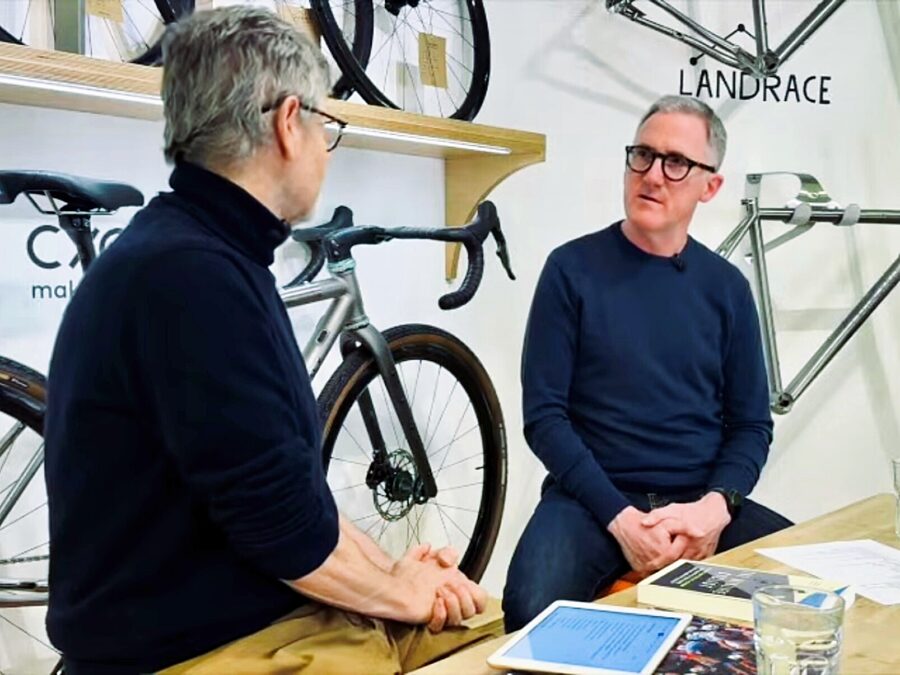
Recording podcast on 18th December 2025
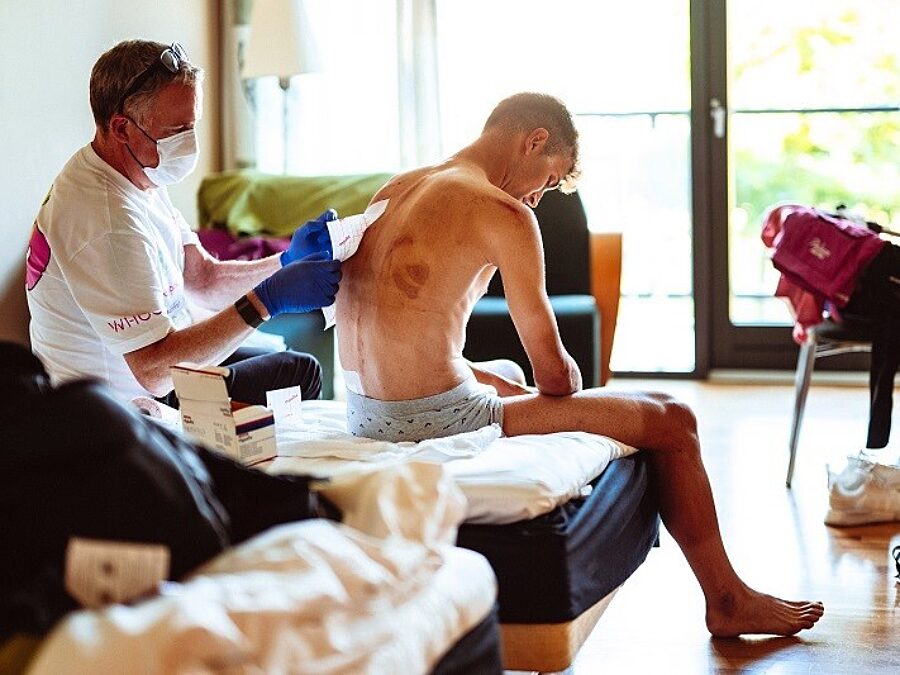
Dr Hulse treats a professional post-crash
Pick Your Paradigm
- Train, Refuel, Recover
- Train, Eat, Sleep
- Ride, Eat, Sleep
All the paradigms appear to be, on first glance, to be uncannily similar. The conversation I had with Dr Hulse concentrated on pulling at the threads of how Midlife Cyclists are innately different to professionals, and how that alters the recommended training balance.
Here are my notes and from our conversation.
The Inexorable Creep of Biology
As we move through our 40's, 50's and 60's there are inevitable age-related changes occurring below the surface.
- Declining chronotropic response - our maximum heartrate falls on average between 0.7-1 BPM (beats per minute) per year. To offset we should train specifically to create the same or more power for lower heartrates. Another way of saying that we ought to focus on efficiency.
- Hormonal changes - e.g. insulin resistance and declining testosterone. Can be somewhat mitigated through improved diet and recovery.
- Sarcopenia - muscle fibre-loss. The only work-around is resistance training.
- Bone density loss - can be helped with resistance training and improved diet
All of which means that compared to professional athletes, who are typically in there 20's and 30's, older amateurs and recreational cyclists:
"Need to recognise that we have less capacity to adapt to a training stimulus, which is either a large volume or high intensity or a combination of the two. It's almost a case of less is more."
"Pro bike-racers are quite literally paid to sleep"
Living The Dream & Lived Reality
Professional athletes are living the dream. Maybe they are also living our dream.
Professional bike-racers are paid to pursue a highly controlled regime of TRAIN, REFUEL, RECOVER. They are quite literally paid to sleep.
In the interview Dr Hulse allows us to peer into the professional athlete bubble and the degree to which they are supported.
- Coaching led by latest research
- Ever increasing investment into high-level nutritional support (thought to be at least partially responsible for recent uplifts in athlete performance)
- Medical screening and support - potentially acute MSK (muscular-skeletal) issues are not allowed to become chronic. Signs of fatigue or over training spotted quickly
- Biomechanical supervision - physio/bike-fitting, podiatry
- Technology and diagnostics to constantly reference health, fitness and performance.
Dr Hulse's central thesis seems to be that the Train, Refuel, Recover paradigm relies upon the very highest levels of analysis, supervision and support that amateurs and recreational athletes simply do not have the resources to sustain over time.
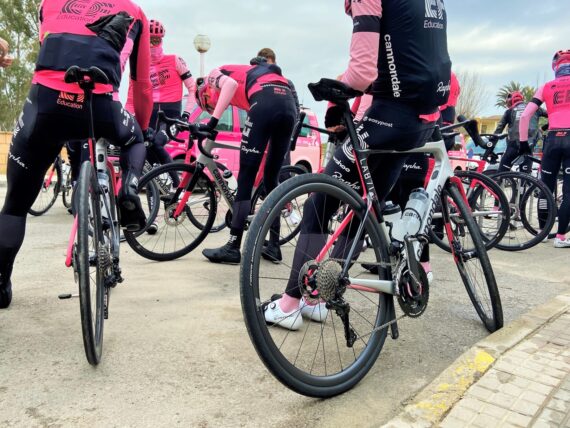
Pro riders are set-up...
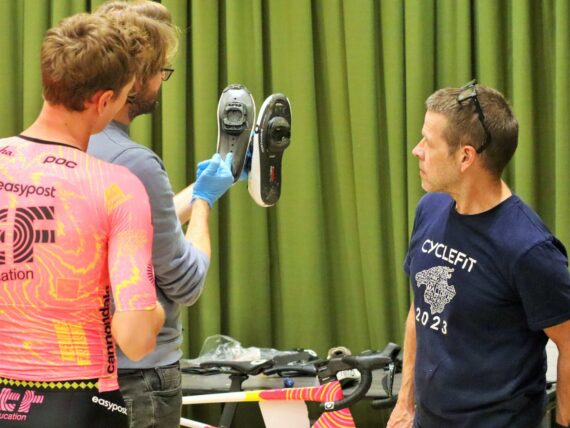
... to succeed. Potential problems are...
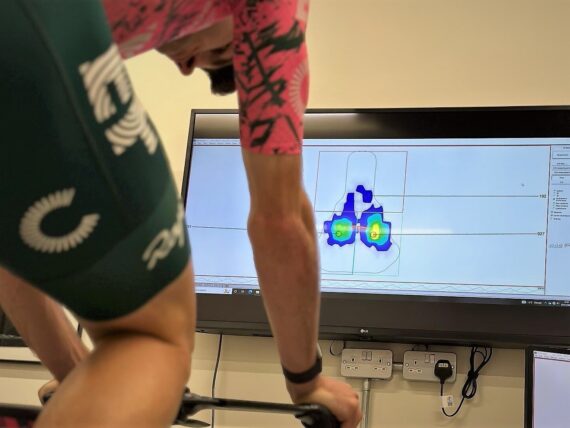
...spotted early and dealt with swiftly!
"It helps if we can accept that our training is not going to be as perfect as a professional athlete's"
What is Training Anyway?
Dr David brings us back to first principles of sports science, and how recreational/amateur cyclists harness the forces evolved of function, to help us reach our goals - Marmotte, Etape du Tour, Haute-Route, Maratona etc.
"What training can we do, both endurance and intervals, is to maximise the adaptation we're trying to achieve, whilst minimising the load and the risk of additional stress".
Dr Hulse is reminding us of three things here.
- Most of us are flying, to some degree, without a safety net - the majority of us don't have a squadron of sports-scientists, academics and doctors evaluating our every step.
- Training involves deliberately and willfully applying an acute stress-riser to our physiology, in the hope and expectation that this specific dose will make our body positively adapt or change to help us meet our goals. Stronger, faster, for longer... etc.
- Applying high doses of stress contains a risk. Especially for older athletes, as it takes us longer and more resources to adapt and recover.
Which brings the conversation to a modern perspective of accumulated biological stress - Allostatic Load.
Read Phil's Cyclist Magazine Four-Part Series First Principles of Training
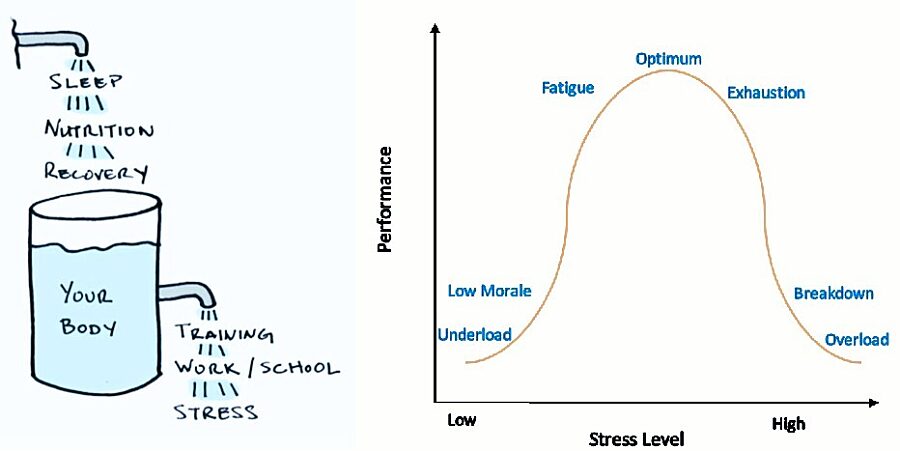
Simple supply and demand model - Sleep+Nutrition+Recovery MUST = Accumulated Stressors to achieve OPTIMUM
"We have moved into a state of pertubation - like a bird trying to escape the effects of an oil slick"
Allostatic Load
Our biology has evolved over millions of years to actively function and intervene in order to bring us back into homeostasis or biological equilibrium. Allostatic load was a concept first posited in 1993 by endocrinologist, Bruce McEwen and psychologist, Eliot Stellar.
Stress is Stress
One of the central tenets of allostatic load is that our bodies cannot differentiate between the multiplicity of stress risers we assault ourselves with in the modern world - here are a few suggestions which can compound into a compressed burden:
- Work becomes more tense and demanding than normal
- Arguments with partners or loved-ones
- High intensity training
- Problems sleeping
- Poor diet
- Too much alcohol
- Anxiety about deadlines, finances, relationships, health...etc etc
- Illness or injury
- More training - intense or otherwise
As the cumulative burden of allostatic rises, our ability to manage physically and emotionally is increasingly compromised. The future starts to become very uncertain - something we have evolved over millions of years to fundamentally disvalue. Our biology is no longer in equilibrium and does not have the innate reserves to process us back to homeostasis. Something needs to change.
It's The Biology, Stupid
The reason I particularly like the concept of allostasis and allostatic load is that it breaks down the false dichotomy of the brain and body. Neurobiology is just biology. Our feelings, emotions and sense of self are downstream events of both. It is something I explore in detail in my new book, The Cycling Addiction. Dr David Hulse has unwittingly strayed into my area of current interest. OTS or Over Training Syndrome (one of Dr Hulse's own specialist subjects) is often the junction between physical and emotional health.
Pro V's Amateur & Allostatic Load
Professional bike-riders also argue with their spouses, and their cars also breakdown and they off course get sick and injured. But they are also well supported to make sure that these stresses minimally interrupt their flow of training and recovery. Any downhill slide where they are not coping physically or emotionally will be caught early. It is very hard to overtrain in a World Tour team environment and very easy for the rest of us.
The Road to Allostasis
The road to allostasis is not well signposted. So, for the amateur and recreational cyclist, especially midlife ones, the central message is as follows. We often have an elevated stress burden. It is self-evidently true that we have more competing demands on our time compared to professional athletes.
At the same time we often have very little structure in place to catch us as as we continue to load ourselves into a counterproductive spiral.
And most importantly, as we age our bodies are less able to metabolise the compressed layers of stress in order to bring us back into a semblance of equilibrium.
Signs that we are carrying an unhelpful allostatic load could include (note - this is my list and not Dr Hulse's)
- Fatigue
- Poor sleep
- Irritable and/or depressed
- Declining performance on the bike
- The training adaption equation has broken down - i.e. increased training = declining performance
- Underperforming in other areas of life - relationship, work, recreational, other past-times
- Picking up injuries and illness that are becoming chronic
Of all these the fourth one should be the most arresting. There comes a point when our allostatic burden is so high that applying training stress does not illicit the positive adaptation that we were seeking; in fact the opposite is true - we simply move more into deficit, fatigue and decline - there is a of biological dissonance between energy demand and energy supply. We have moved into a state of pertubation - like a bird trying to escape the effects of an oil slick.
"Allostatic Load is a simple supply and demand model - Sleep+Nutrition+Recovery MUST equal Accumulated Stressors to achieve OPTIMUM"
"Every training paradigm is a live biological experiment."
"Sleep is the number one recovery modality"
Dr Hulse's Law - Let's Re-Pick Your Paradigm
The start of any year is a re-set and re-focus moment for many athletes. I have added qualifying detail around Dr Dave Hulse's training paradigm spectrum, to help us all review part of his spectrum best reflects our circumstances.
The Paradigm Trap
In the interview, myself and Dr Hulse discuss the possibility of shifting between the paradigms at different parts of the season or if our circumstances should change. Dr Hulse's makes the point that we can and do shift paradigm, but we should also be clear that as we travel along the many sub-waypoints from RES toward and including TRR, that the entirety of our lived existence has to become exponentially more controlled. If we just increase our training stressors, without altering the rest of our life commitments, we risk the paradigm becoming unsustainable and our performance and health both deteriorating. Every training paradigm is, in that sense, a live biological experiment.
it is very unlikely that we any of us will have the resources as amateurs to occupy a pure TRR universe for an extended period of time. It requires more sacrifice and resources than most of us can sustain.
- Train, Refuel, Recover (TRR) - Goal-oriented, data-driven, precise, no distractions, constantly monitored
- Train, Eat, Sleep (TES) - Goal-oriented, data-driven, minimal distractions, structured supervision
- Ride, Eat, Sleep (RES) - Goal-oriented, possibly data-driven, flexible training regime that reflects a midlife athlete with various, uncertain and dynamic responsibilities and time-constraints. Requires high level of introspective honesty and some external supervision.
Dr Hulse's Law
Dr Hulse is a thoroughly reasonable and measured person - I think this is clearly visible throughout this interview. He is also an incredibly experienced, caring and intellectually oriented physician. He is restlessly interested in sports medicine and motivated by ideas and research. So when he says that "less is more" when he talks about midlife amateur and recreational athletes training v's life balance, it is not a throwaway or trivial statement. It demands scrutiny and examination. Precisely because it derives from a position of experience caring for his two cohorts for many years - pro bike-riders and midlife cyclists. And mostly because he diligently cares about their outcomes.
We should all take Dr Hulse's paradigm spectrum very seriously. We may want to tick the 'Train, Refuel, Recover, box but can we actually demarcate all the time and resources required.Even Train, Eat, Sleep, is a push for most of us. For any plan to be sustainable we need to be resilient to the training and other life demands that are imposed within it. And a viable feedback loop for when our resilience is failing and there is Burden v's Biology mismatch building.
"Training is only beneficial from both an increased performance and health perspective, if and only if the body is rested and relaxed."
Interview Contact Information
Dr David Hulse - Sports Physician - Contact
Simon Willis - Filmmaker - Contact
Nichola Roberts - Cyclefit Physiotherapist - Contact
Dr Jon Baker - Performance Physiologist - Contact
Dr Nigel Stephens - Consultant Cardiologist - Contact
This video-podcast interview was recorded at Cyclefit Store Street on 18th December 2025 by Simon Willis. It was edited by Simon Willis. It is the first part of a two-part series.