
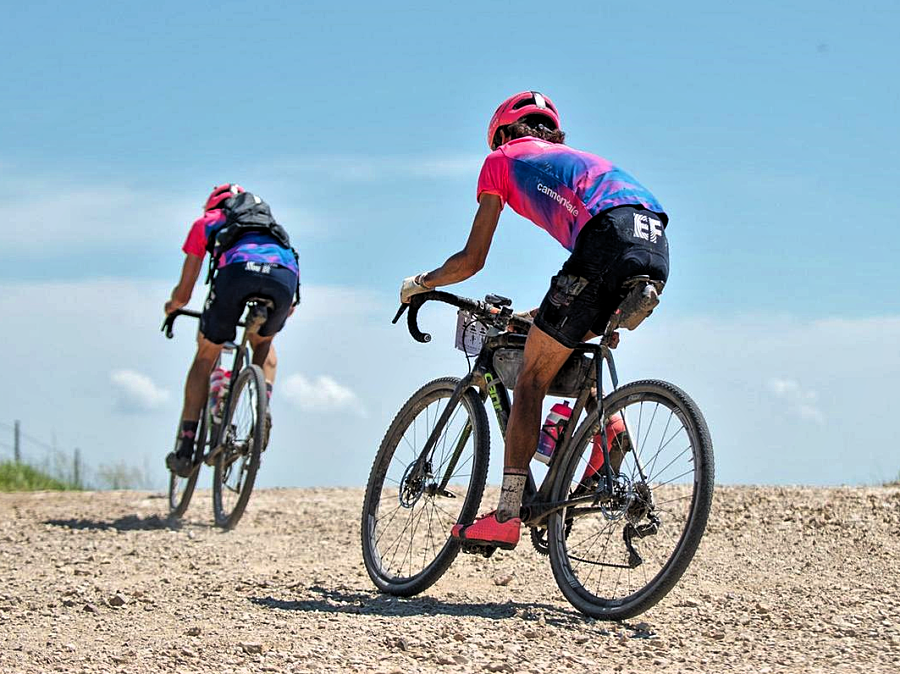
Image possibly Mikel Zubieta from 2020 Unbound
"Gravel is all dust and delusion, but with better marketing"
The Unified Theory of Gravel
The cult of gravel caught many people out:
"Sorry, you want me to pay thousands of pounds to ride on even worse roads?"
It is fair to say that many still haven’t come around to the charms of rolling the pebbles. But it remains an unavoidable truth that we now build more gravel/all-road bikes at Cyclefit than we do pure road/race bikes. Gravel is a trend and not a blip.
A Brief History of Riding Nowhere..
Gravel riding was born in the USA with events like Dirty Kanza and Trans-Iowa in the mid-2000’s. Which still doesn’t explain quite why gravel riding has translated so well to the UK, where Bedford to Biggleswade lacks the Unbound romance of Flint Hills in Kansas.
Gravel Curious
If you are even slightly tempted by gravel riding but can’t quite shake the feeling that it could all be dust and delusion, but with better marketing. This Journal will try and clarify matters for you. We will also impart our Cyclefit top-tips and favourite Gravel hardware.
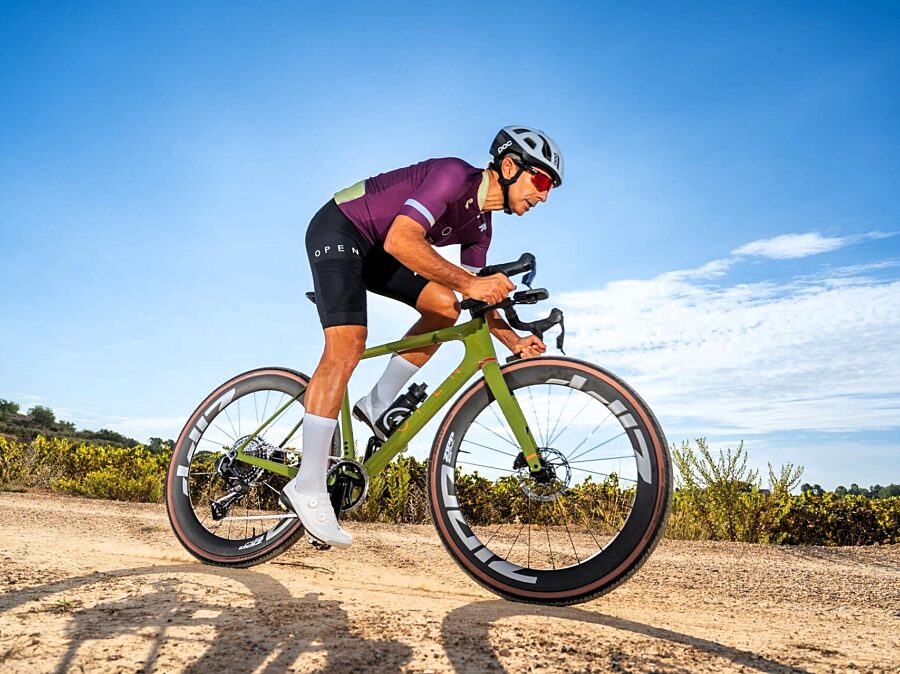
Open's new U.P. 2.0 hits all the right notes - aero, huge tyre-clearances... etc
The Case for Gravel - The Long and Dusty Road to Happiness
- Freedom - all cyclists seek it - And we seem to feel a more heightened version of it when we can get off the road onto gravel, tracks, paths etc. The silence is quite addictive - the only sound is nature and slight crunching of cinder-under-rubber.
- Safety - Being off the road is generally a good thing in terms of safety, especially in cold and icy conditions. Being away from cars and trucks is truly relaxing.
- Riding gravel makes us better riders - undoubtedly true and a positive aspect to riding off-road. Controlling your bike on a variety of surfaces and conditions requires different skills, which give us confidence and technique we can deploy everywhere - descending an Alpine col for example.
- Alternative racing scene - road-racing and criteriums are not for the faint-hearted. Gravel racing is generally more relaxed, and notionally at least, safer.
- Smooth tarmac is another country now. Gravel bikes with bigger tyres are arguably better, even if you never ride off-road! The UK's roads will not improve for many years.
- Gravel bikes are infinitely cool, bonkers versatile and fun to ride. Wherever you choose to ride.
- Expeditions beckon - load 'em up and ship the hell out! Gravel bikes have made bike-touring suddenly very, very cool!
- A gravel bike is only ever a set of 30mm slicks from being an astoundingly capable road bike. Open have built a superb brand on this philosophy.
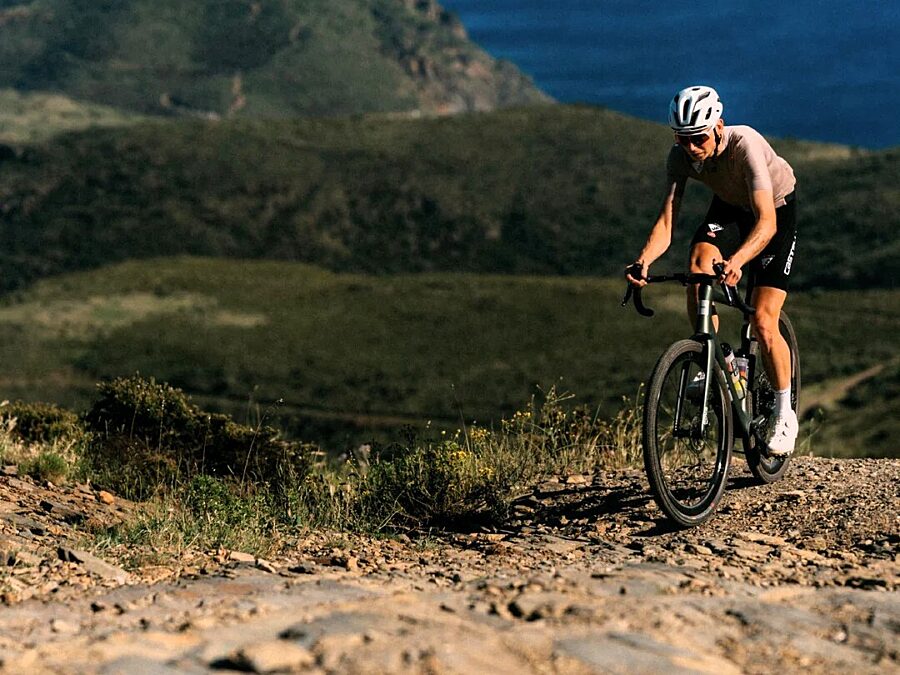
Enve MOG - suitably lost and remote. Tick.
The Fundaments of Gravel
First let's look at what your gravel bike should be made of - carbon or titanium or maybe even steel.
It's Immaterial
The advantages of carbon gravel bikes are:
- Lightest - Right now nothing is lighter than all-carbon. Please note that cheaper carbon frames are not necessarily very light or very stiff. Carbon is NOT created equal. It depends upon the mixture of hi-modulus and low-modulus weaves that are deployed. Hi-mod is light and stiff, low-mods are heavier and more flexible. Carbon is a catch-all term for composite of materials.
- Stiffest - The right kind of carbon composite will still create the most direct drive-train transfer. Period.
- Carbon is easier to make into radical aero shapes. The way most carbon frames are constructed means that designers have more flexibility as to the frames silhouette. Aero-shapes made easy.
The disadvantages of carbon gravel bikes are:
- They are more vulnerable to damage from stone-chips and crashes. Just an inescapable fact - the same as road-bikes
- Carbon frames will not generally last as long as a titanium frame.
- Stiffness is a double-edged sword. The stiffer a bike is, the less comfortable it is. Arguably less important with a gravel bike where the world is being mediated through bigger tyres.
The advantages of titanium gravel bikes are:
- Resilience - They are not called bikes for life for nothing. A well made ti fuselage shrugs off being thrown against a stone-wall as you jog into a checkpoint. Or a full-on stack down a rocky descent. Hard to scratch, hard to dent, no paint to chip and won't rust if you throw it in the sea. No worrying or paranoia about cracks or defects you can't see. Titanium is not a delicate flower.
- Comfort - the magic metal does weird things with bumps, roots and rocks. They disappear in the wash of grey metal. Titanium wasn't created on this planet and that's how it rides - otherworldly!
The disadvantages of titanium gravel bikes are:
- Heavier than carbon. Even a Seven XX could be up to 300-400 grams heavier than the lightest carbon frames. If weight is your top criteria, then go for an Open UPPER 2.0 (880 grams), Ridley Astr (1090 grams) or Enve MOG (950 grams).
- Not as stiff as a high-spec frame like an Open UP, Enve or Ridley Astr. Which is why most gravel-racers ride carbon bikes.
- Hard to make aero. See Phil's Myth of Aero piece.
n.b. Steel is pretty much the same as titanium in all respects. Except maybe a touch more fragile and slightly heavier (but not always).
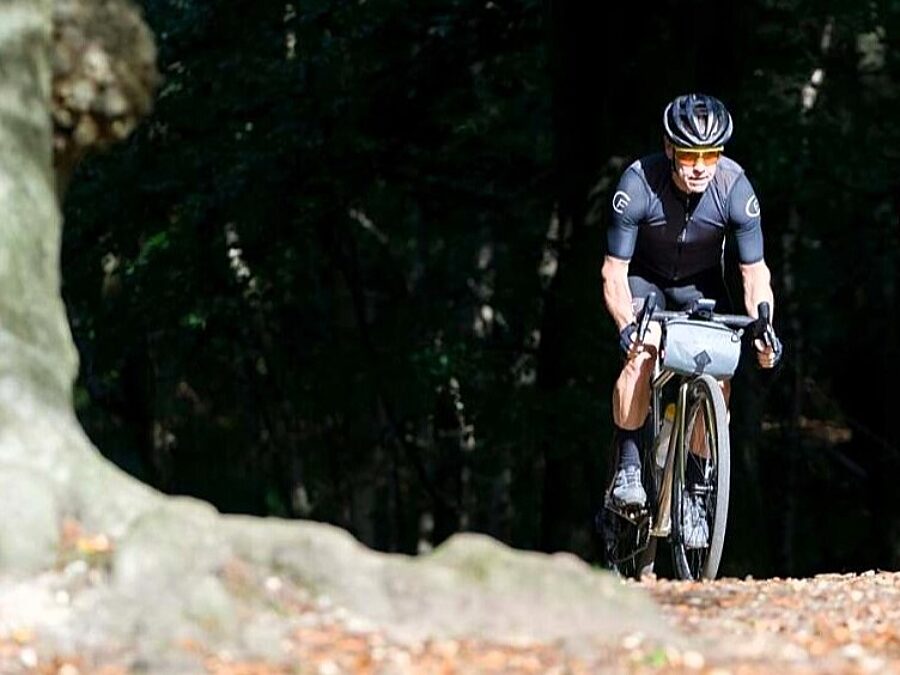
LANDRACE titanium - Forest tracks and trails...
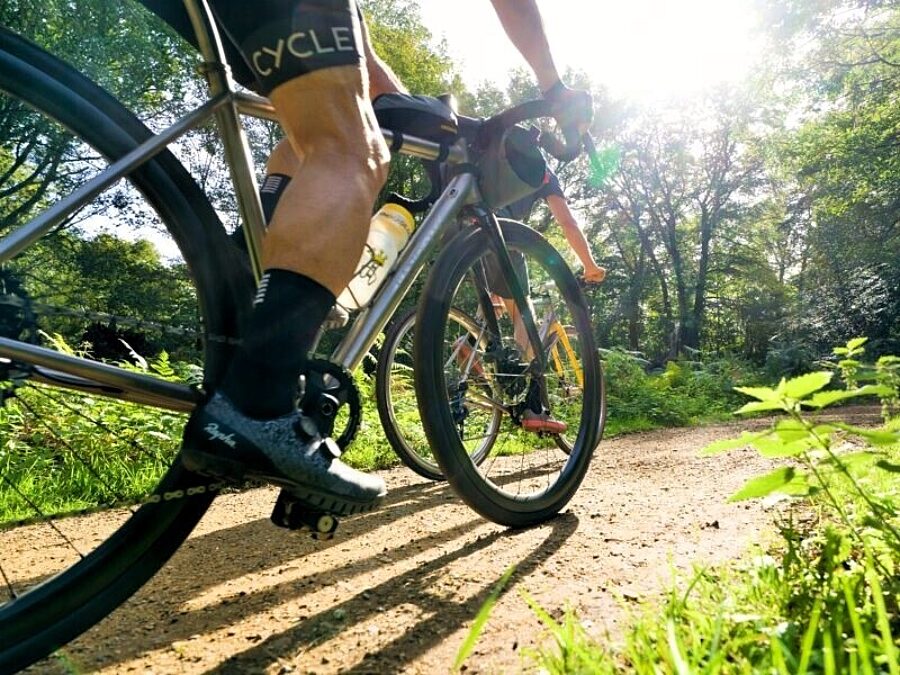
...Are some of the best places to enjoy gravel-bikes.
"Bedford to Biggleswade lacks the Unbound romance of Flint Hills in Kansas"
Cyclefit's Gravel Manifesto
- Never be under-tyred! Consider this no1 golden rule when buying your bike and planning your ride or expedition. Bigger tyres are more comfortable and also give you riding confidence. Bigger tyres do not necessarily come with higher rolling resistance. Sizes are going up all the time - 50mm is the new 45mm. Hard to over-order on tyre-width.
- Run your tyres Tubeless. Doesn't matter what you do on the road - you will benefit from running your gravel tyres tubeless - better rolling resistance, comfort, and of course puncture-resistance.
- Run your tubless tyres at 25psi. Sounds too low? Maybe a bit higher if you are 80kg an above. By the way, our favourite tyres are WTB Riddler 45mm and GravelKing X1 R-Line
- Never be under-geared. Almost as bad as being under-tyred. Being under-geared means walking when you could be riding, pedalling with low cadence and loading up of knees and hips. In fact it is almost impossible to have gears that are too low. If you are heading for the hills think about SRAM Mullet
- 2 X or 1 X? We generally advise a 1 X set up on a gravel bike - simple, light and you get the best gear-choices. 1 x 13 SRAM XPLR is very much the groupset of the moment and for good reason.
- Our favourite gravel-saddle - Wove Mags Road+Gravel saddle
- Our favourite gravel wheels - LANDRACE GRV'S - Made by Barna in Bloomsbury
- Our favourite gravel bike - LANDRACE Boxer
- Any questions?
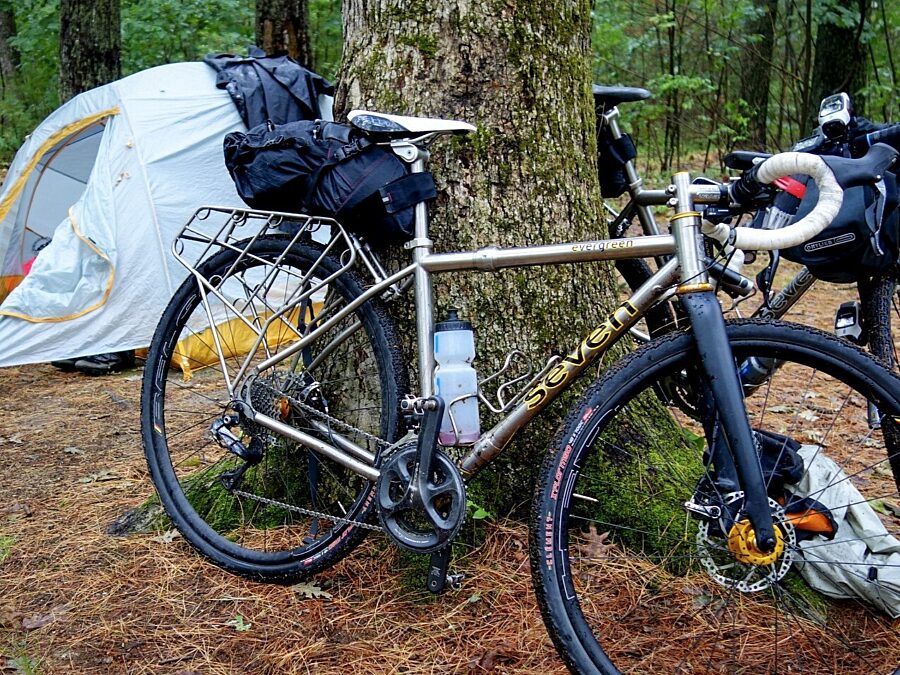
Heading into the backcountry? Seven Cycles
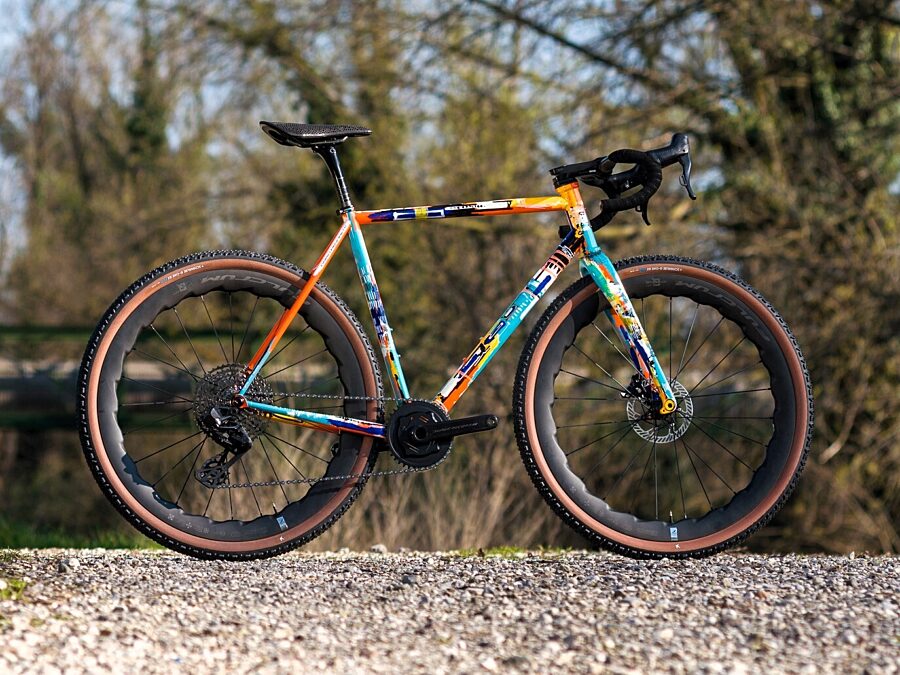
Custom Pegoretti Orlando with Ciavete paint
Gravellers of The World Unite...
It's not all tan-walls and bivouacs. Gravel bikes and riding are hugely entertaining and very addictive. Whether you go out on your own or in a small group. Whether you are stealing a couple of hours on the weekend or riding from Poland to Greece. Gravel riding exudes escape and adventure. If you are still unsure please contact us and we will do our best to arrange a weekend gravel test-ride for you on a LANDRACE Boxer.
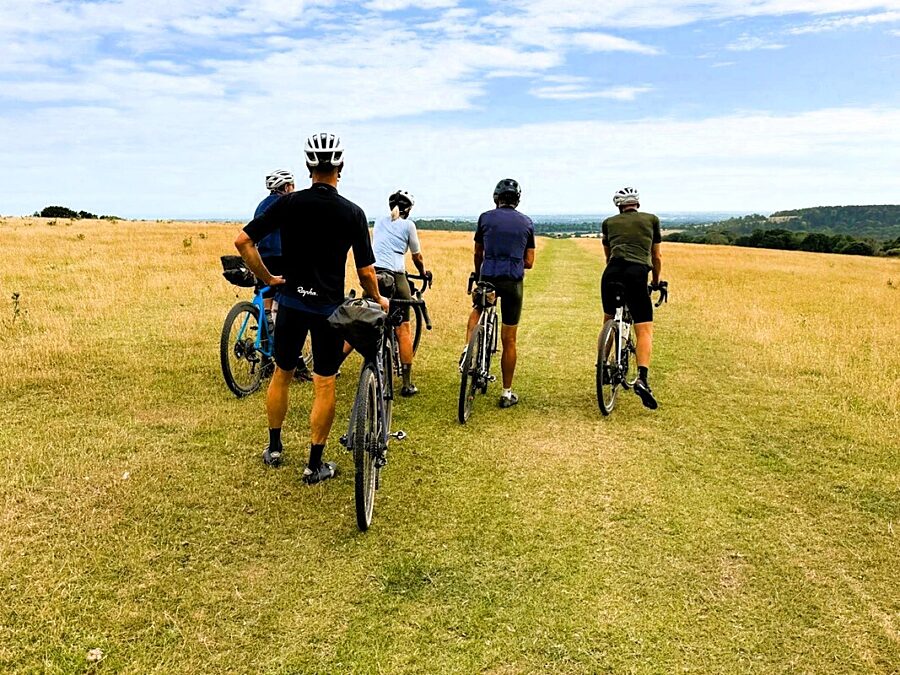
LANDRACE TO SOMEWHERE - Gravel Rides
HIDDEN TRACKS - Rides & Events